To mark Youth Work Ireland Week (11–18 April), Louth County Council’s Communications Team spoke with Cllr Seán Kelly, Cathaoirleach of Louth County Council, who reflects on his own experience in youth work and the role youth services play in supporting young people and strengthening communities across County Louth.
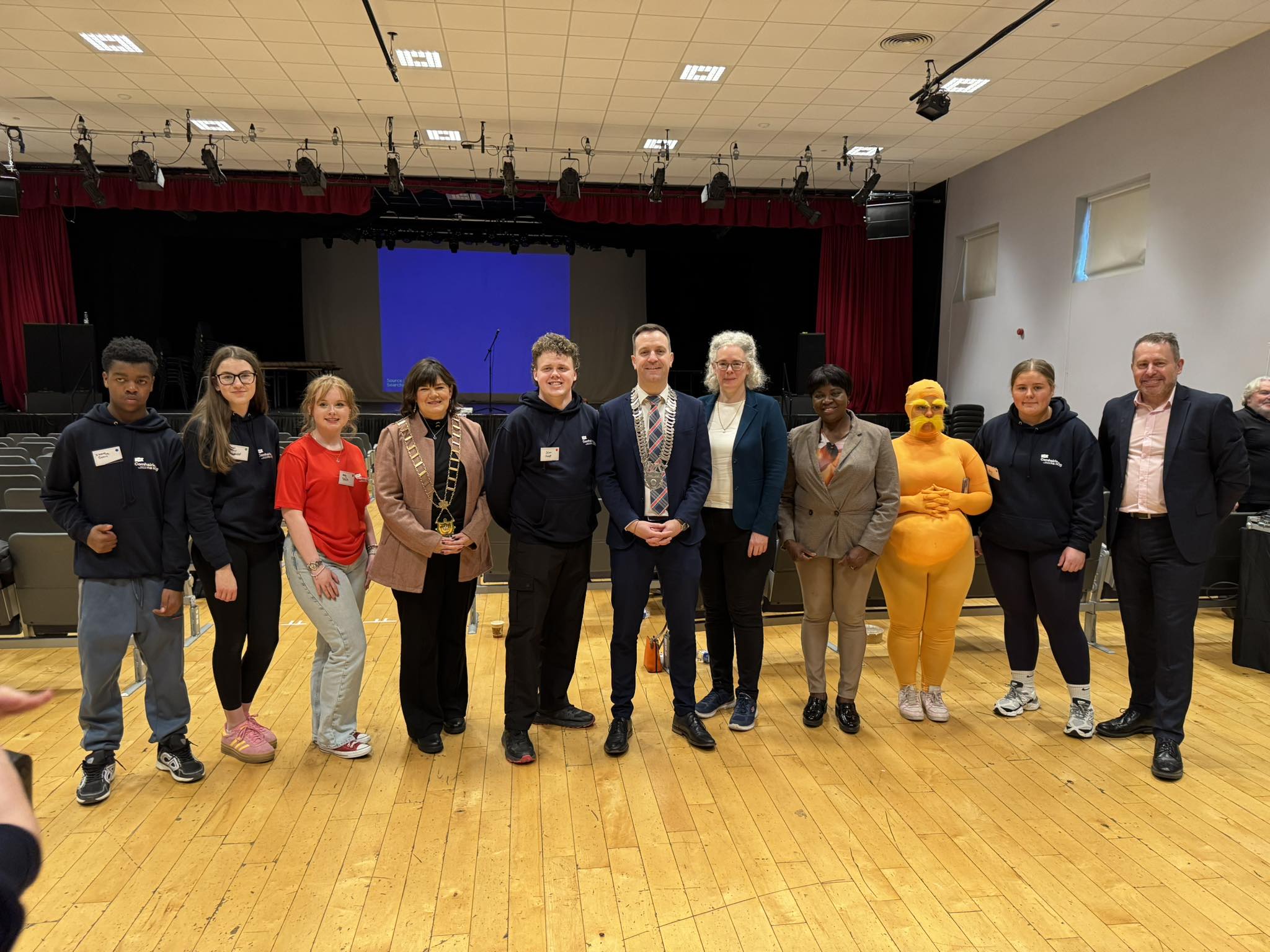
CT: Before getting into politics, you worked in youth work. Can you tell us a little bit about your time in that?
SK: I was heavily involved with St Patrick’s Scout Group, where I had a younger group called Beavers for kids in their formative years, but the real thing that pushed me towards politics was my work with the Friary Youth Club and Knockadoon Youth Week.
The Friary is a Dundalk-based youth club. When I was running it, we had about 400 members and 70 leaders, and we were operating across two halls at the Friary and the Dominican Centre on Friday nights. That, subsequently, got me involved in Knockadoon Youth Week, which is an extension of the Dominican Order. It’s a residential summer camp that’s based in Cork. We ran that camp for four weeks every year; we’d take kids from Dundalk, Athlone, and Newry, as well as kids from very working-class backgrounds in Tallaght, Limerick and Cork City.
That experience helped me to understand many of the issues people face on the ground, and it continues to inform my work in politics.
Youth work is defined as expressive, educative, participative, empowering, and inclusive. Would you agree with that? Or is there anything you’d like to add?
Absolutely, all of the above. And what a lot of people don’t realise is that when volunteers get involved, they obtain a sense of achieving something. As a volunteer, you’re not only making a difference in the lives of children, but you also gain a real sense of purpose from doing something positive. At Knockadoon, we got to know loads of kids who went to the camp, and they’ve all gone on to do well for themselves. They’re not kids anymore, they are all in their early twenties - which shows my age now – and have gone through college and are doing well for themselves now.
What do you think is the biggest challenge facing young people today?
I think it’s the societal factors around them, especially for kids from a deprived background. When opportunities are so closely linked to where you’re born or where you go to school, you’re nearly already at a disadvantage. I think that’s completely wrong and something we need to change.
I think addiction is also a massive issue that’s now affecting kids at a young age as well. And when I say addiction, I don’t just mean addictions the kids may have; I’m talking about things like a parent’s addiction, where the issues are having a knock-on effect on the kids.
If you could change one thing about how Ireland supports its young people, what would it be?
I think it’s going back to what I said at the start, making sure every child has an equal and fair shot, so that if you are an extremely bright child, it does not matter where you are born. If we had the right systems in place, there would be many more doctors, engineers and scientists coming from areas that are currently under‑represented. At the moment, they don’t have that opportunity. The government has made massive strides with things like the SUSI grant and in other areas, but until we get to the point where no single child falls through the cracks, we haven’t resolved the problem.
What role do youth services play in shaping community development?
They play a massive role. I look at the Cox’s Demesne Youth & Community Project, for example, as a shining example of what youth services can do for young people on the ground. There are hundreds and hundreds of kids from the Cox’s area who have gone through that project and have come out the other side, achieving great things in life.
You mention Cox’s Demesne. Can you tell us a bit more about the House Project and why it’s important?
It was set up in Cox’s Demesne, which is a very socially deprived area of Dundalk. The House Project basically offers a number of services. They have a family liaison office, they have homework clubs, and they have a social worker who supports and mediates with families facing issues at any of the local feeder schools, especially the Redeemer schools, the De La Salle, and the Castletown Girls School.
What services are currently available for young people in Louth, and where do gaps remain?
There’s Crosslanes in Drogheda, which is a mental health facility. I really don’t want to give out about the HSE, but, in my opinion, that service is under significant pressure and, in my view, is not currently meeting the level of need.
There’s also a platter of other groups trying to provide services. Obviously, from my side of the house, I’m involved with Darkness into Light, which is run by Pieta. Pieta has a full-time service based in the Redeemer Resource Centre, where we have a full-time counsellor – but, in general, there aren’t enough services for young people and people of all ages around the county.
How would you describe Louth County Council’s role in promoting youth services?
I think the community section in the Council is doing fantastic work promoting and supporting youth groups across the county. The Public Participation Network (PPN) is an example of that, providing the necessary training and pointing them in the right direction regarding grant funding.
We also have our own policies, including our new play policy, which went out to consultation last year, and our playgrounds and sports facilities. What we need is more facilities for young people so that they have an outlet when they want to participate in events and activities. Not every child is going to be involved in sports, so it’s about looking at those kids who don’t fall into that bracket: how do we keep them engaged and active and get them out of the house?
A lot is happening. Louth County Council provides over 1100 services across the board, but if you asked someone on the street what the Council does, they might struggle to name more than two or three services, and that’s an issue we have to address as well. Thankfully, we’ve got a great new communications unit that’s doing it.
If somebody has a bit of free time, or they’re maybe retired and they want to get involved in youth projects, where would you tell them to start?
I would say pick up the phone. Once you get yourself Garda vetted and do the necessary training, there are so many opportunities out there. And as I say, you can give so much back. For those who have retired recently, who may come from a teaching background or something like that, being a steady influence in a young person’s life can make all the difference to them.
Finally, is there anything else you’d like to add?
Youth work is important. It makes a massive difference in the lives of young people, and we need to do a lot more of it because no child should be left behind.


